

How to Roast Garlic in Olive Oil (Garlic Confit Recipe)
This post contains affiliate links (paid links). Advertisements displayed on this website do not reflect endorsements or recommendations made by Mitten Girl LLC. As an Amazon Associate I earn from qualifying purchases.
Skip to Recipe
As a garlic lover, I’m a huge fan of soft, sweet roasted garlic cloves. And oven baking or roasting garlic submerged in olive oil – known as garlic confit – is my favorite way of preparing it.
The roasting process brings out the natural sweetness and natural sugars in the garlic while completely removing any bitterness or sharp flavors in it.
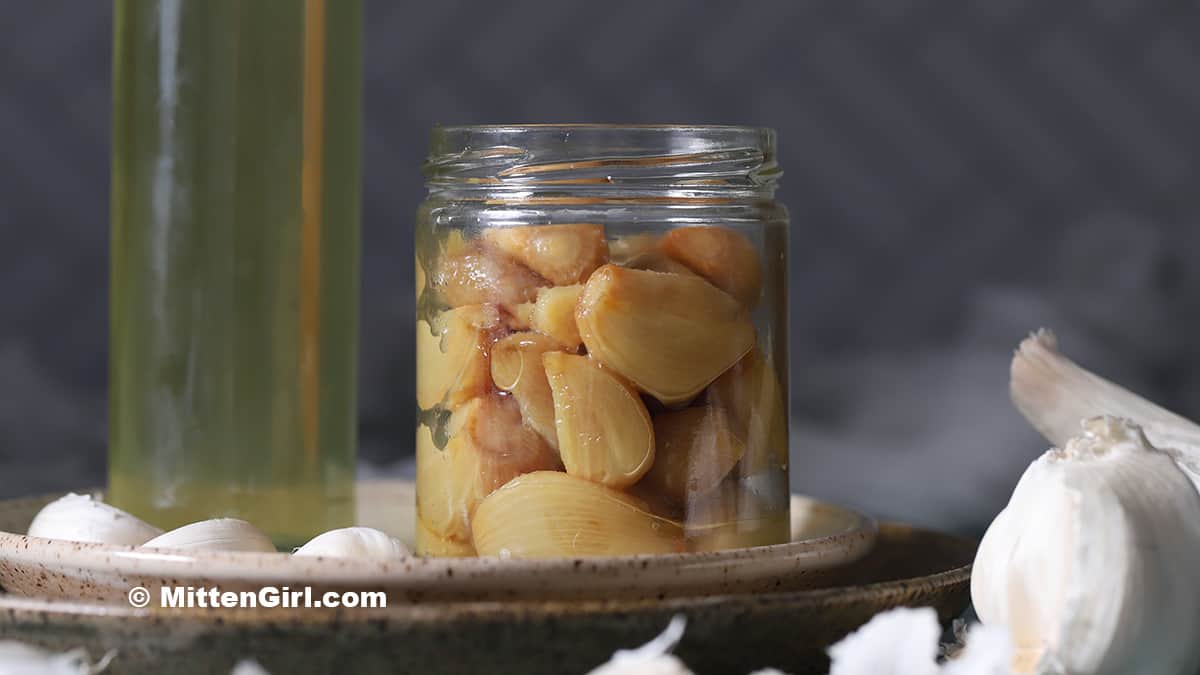
There are a lot of different ways to make roasted garlic. One easy way is to cut off the top of the bulb, drizzle it with a bit of olive oil, and make an aluminum foil packet out of the bulb. You then roast it in a muffin tin or on a baking sheet until the garlic is soft and tender.
And while I’ve made a LOT of roasted garlic this way, my favorite is this roasted garlic confit recipe. If for no other reason than it’s easier and less messy than the foil method of cooking garlic.
Confit means that something has been cooked while being submerged in oil. When you cook garlic this way, you end up with roast garlic cloves that are soft and creamy, but maintain their shape and size. (Unlike roasting garlic in foil which for me always turns out to be a delicious, smushed mess once it’s out of the foil packs. Plus I’m much more likely to burn it!)
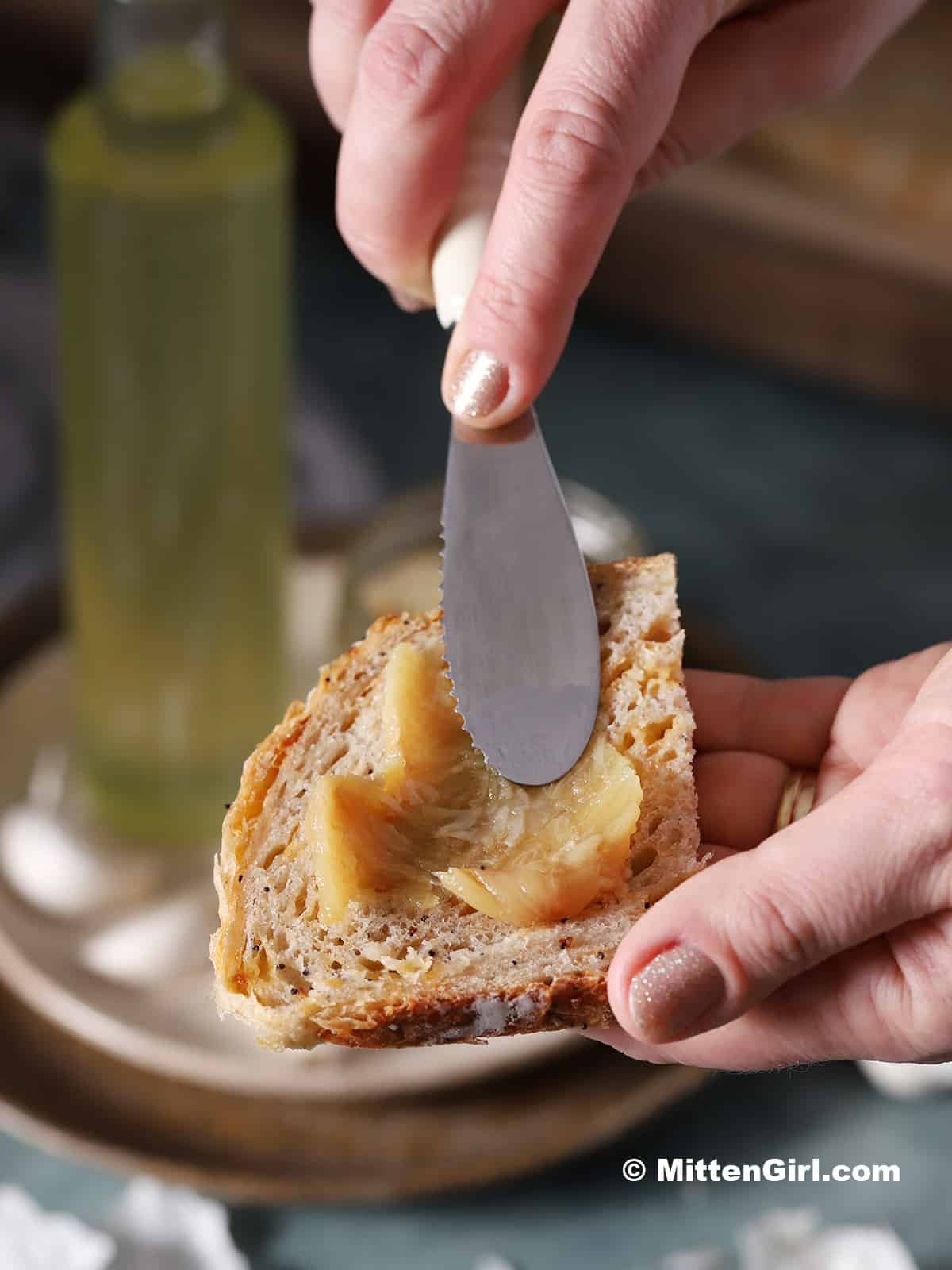
Confit garlic spreads like butter and leaves behind a delicious dish of garlic-infused olive oil, which is perfect to use in homemade salad dressings, toss with pasta, or brushed on your favorite homemade pizza crust.
Ingredients for Roasted Garlic Confit
There are only two ingredients in this recipe, so make sure both are quality ingredients.
- Fresh Garlic – Look for fresh, firm garlic bulbs with no visible growth coming out of them. Once you’ve peeled the cloves, only use ones without any blemishes on the skins.
- Extra-Virgin Olive Oil – Choose a good quality olive oil for this recipe. Extra-virgin will have a lesser flavor to it vs less expensive olive oils.
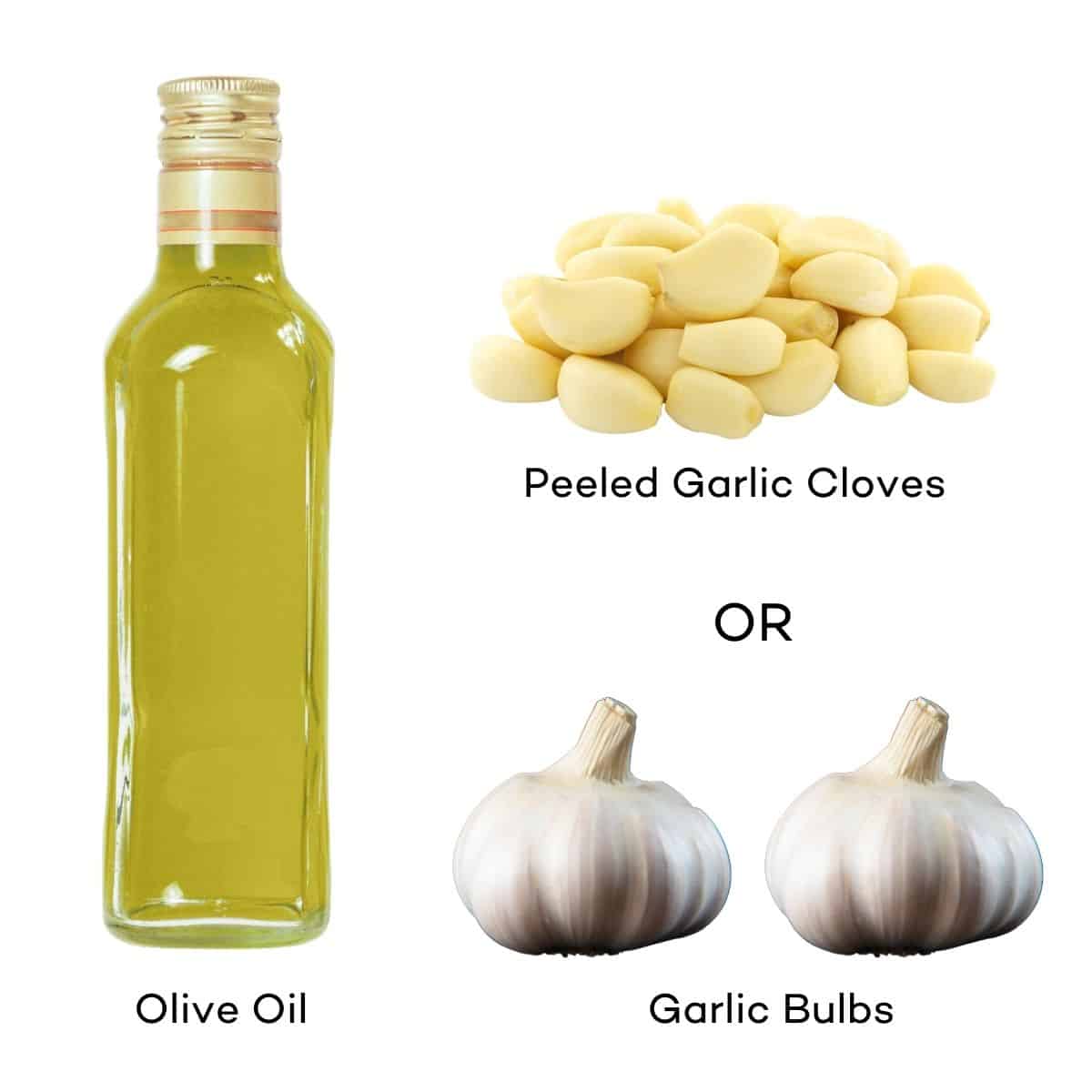
Garlic Bulbs vs Garlic Cloves
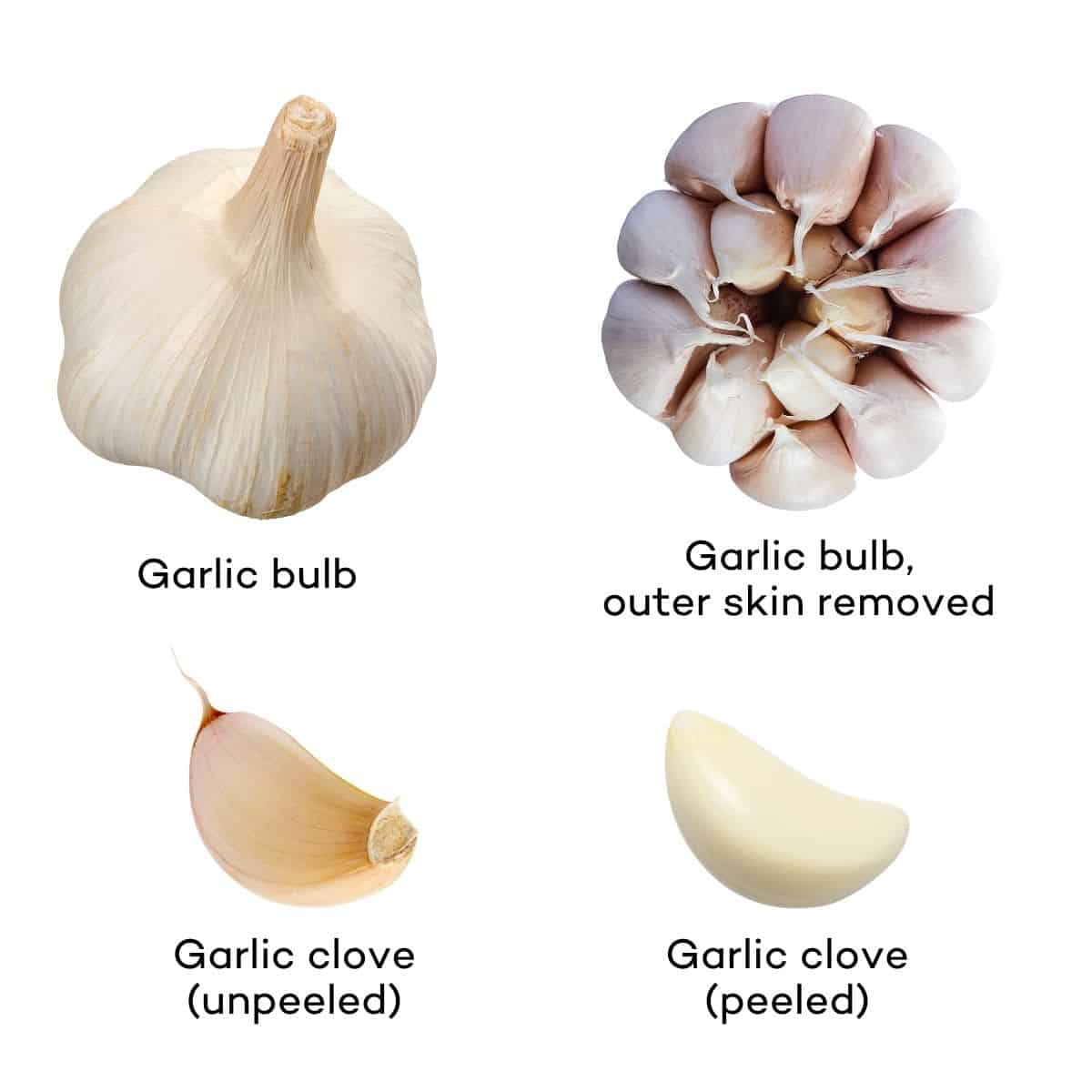
A quick reminder of the difference between garlic bulbs and garlic cloves and what garlic looks like as you break it down and peel it. For this recipe, you’re using peeled garlic cloves (a lot of them).
How to Roast Garlic in Oil (Making Garlic Confit) – Step by Step
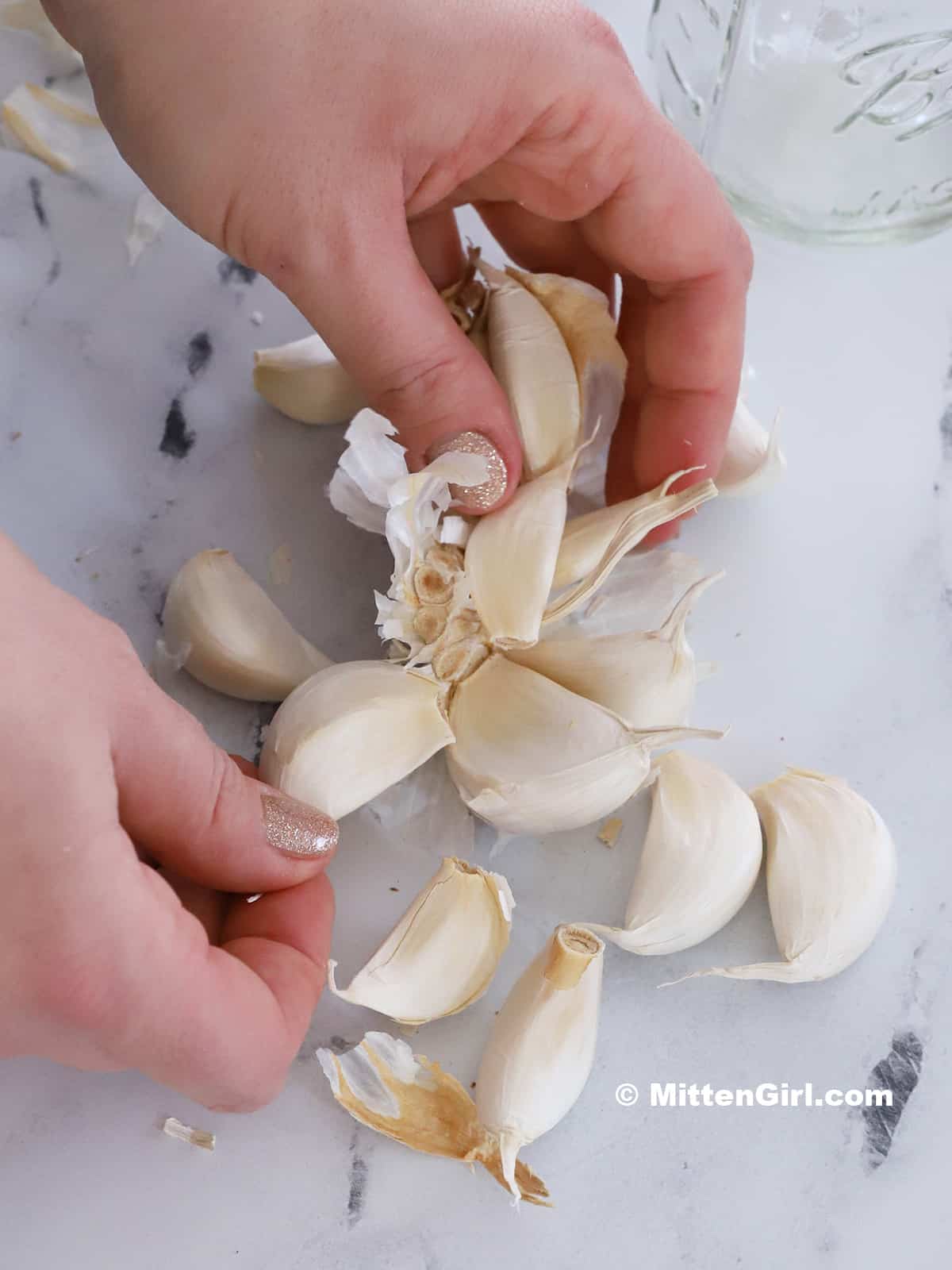
Break open each bulb of garlic. Pull out the individual garlic cloves. Peel the cloves using a small paring knife.
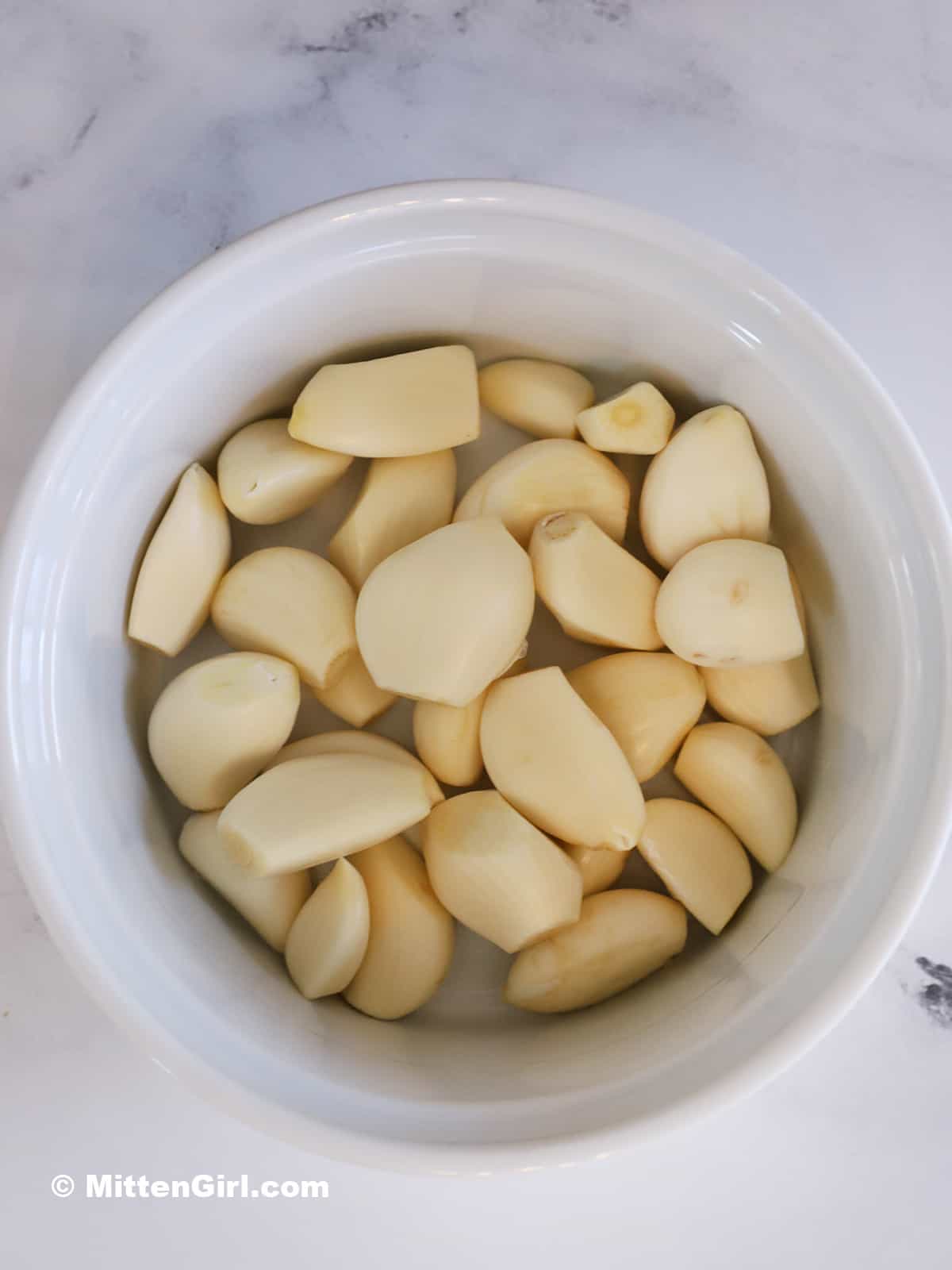
Place peeled garlic cloves into a small, ovenproof baking dish.
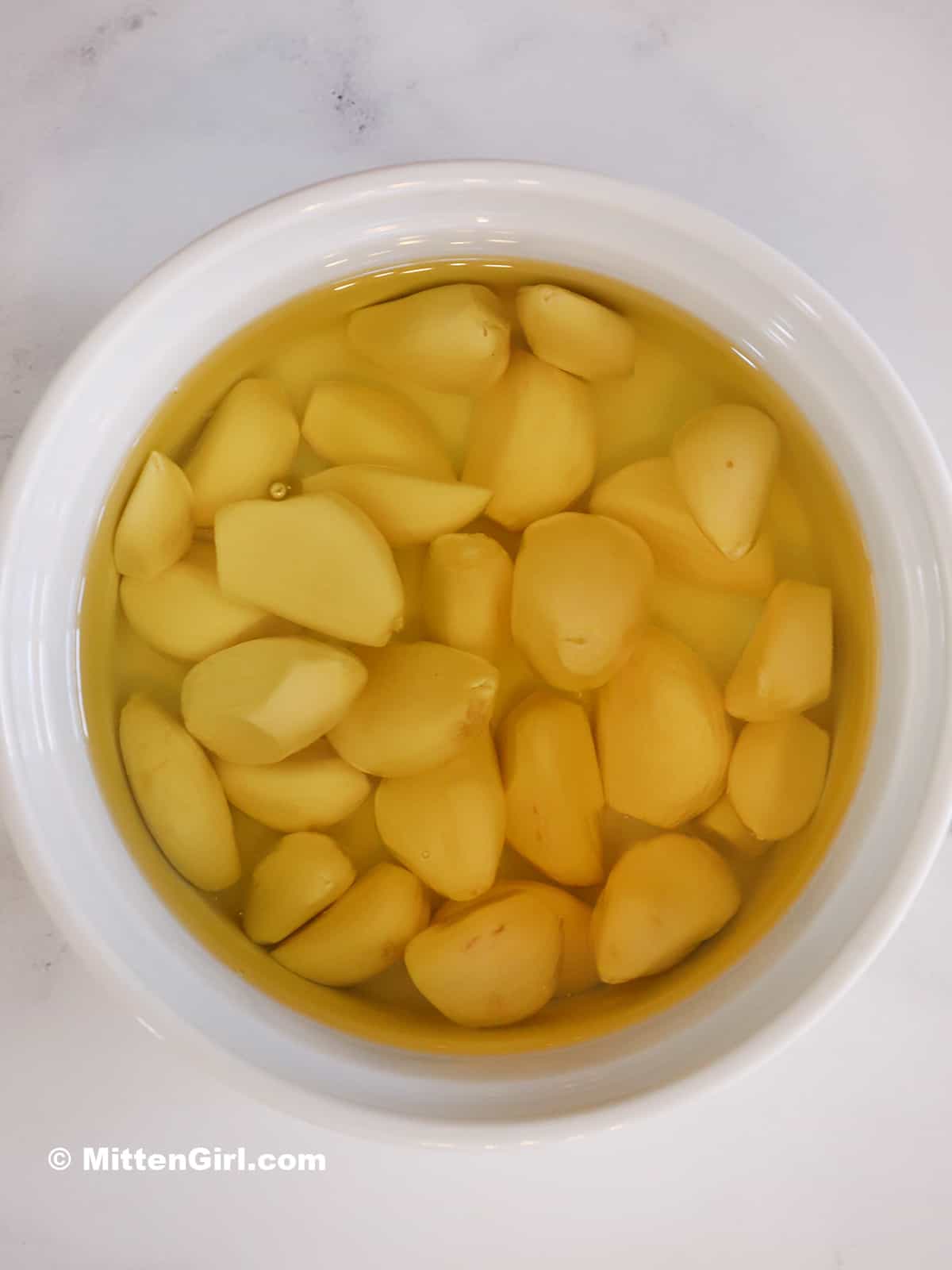
Pour in enough olive oil to cover all of the garlic cloves. (Make sure no part of the cloves are sticking up above the oil line.)
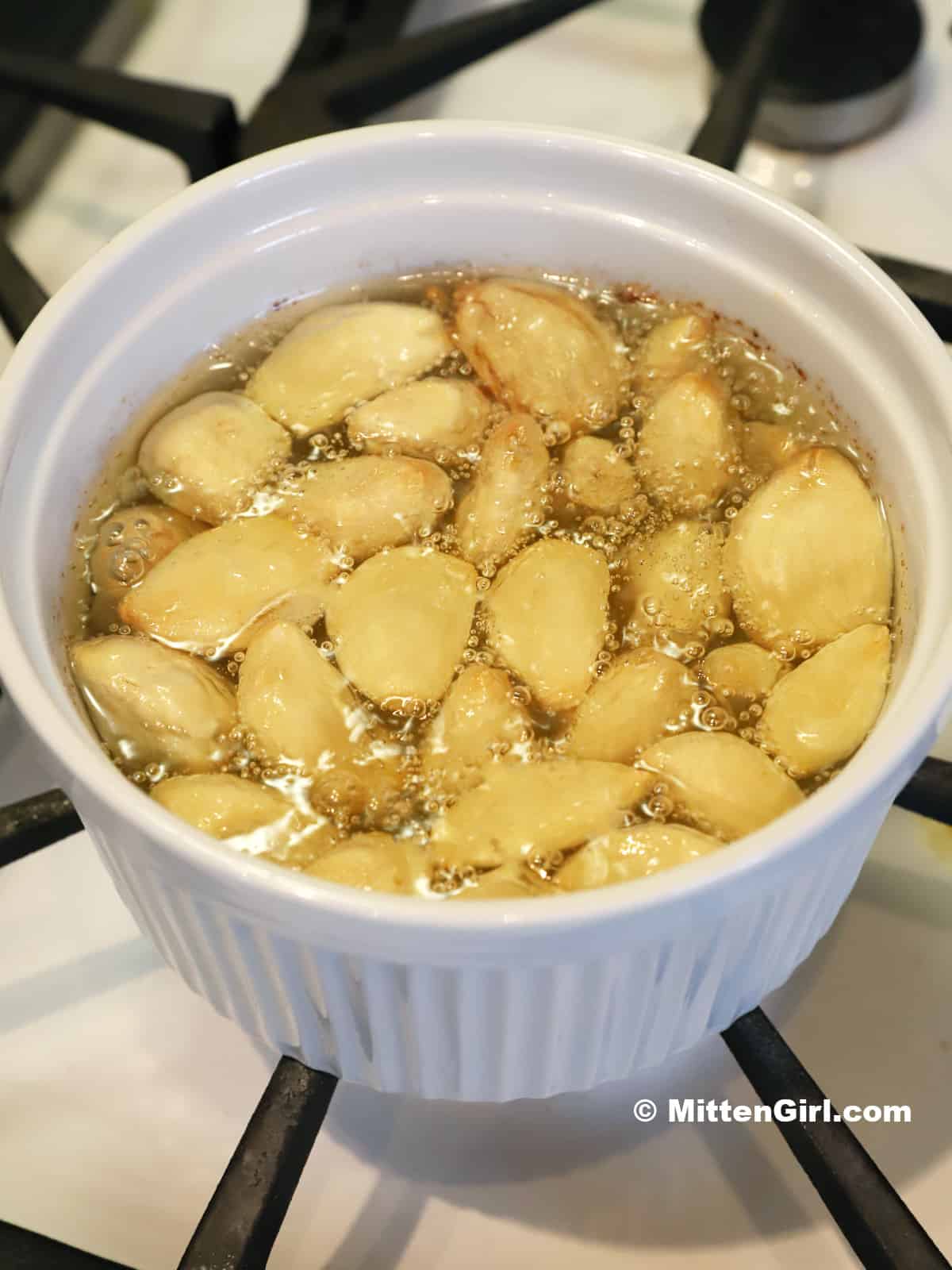
Bake at 350 degrees F for 15 minutes. Remove from the oven and let cool for 30 minutes.
Using a slotted spoon or small mesh strainer, remove the cooked garlic cloves from the oil.
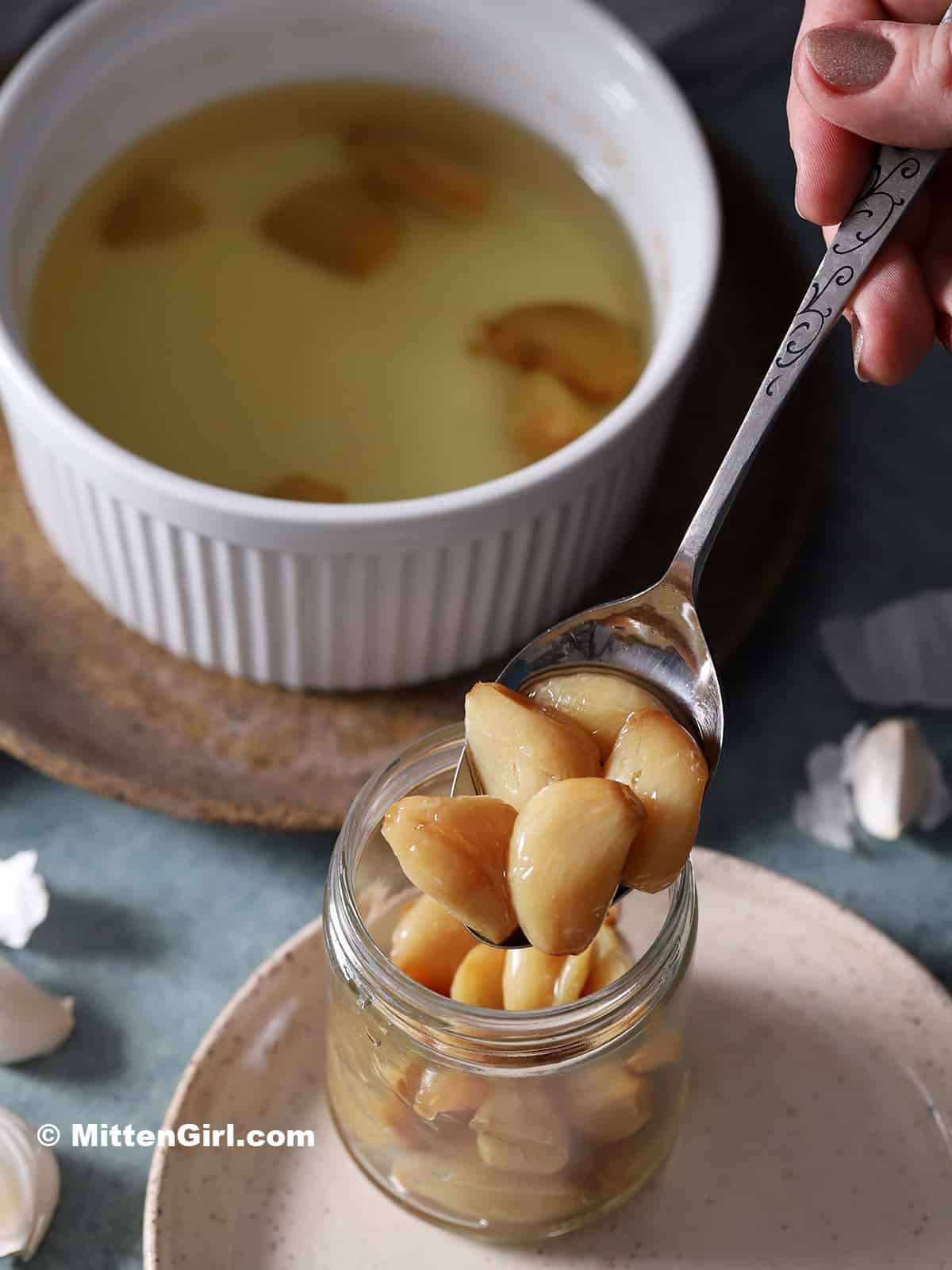
Use immediately or place garlic cloves in a glass airtight container in the refrigerator for up to 7 days.
Strain the remaining garlic-flavored oil through a fine mesh strainer to remove any lingering bits of garlic. (Be sure it has COMPLETELY cooled before doing this step.)
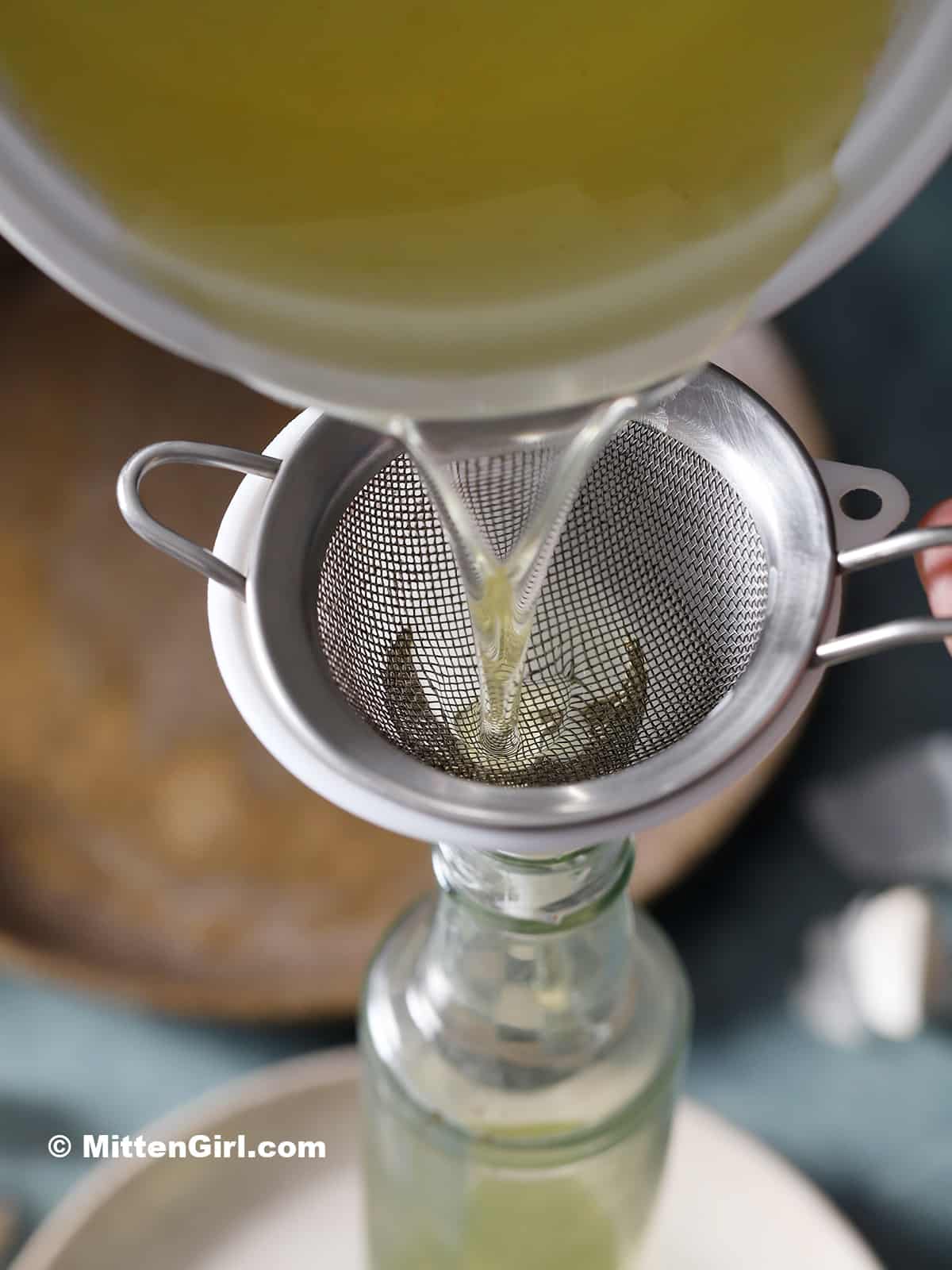
Store the garlic oil in a small glass bottle.
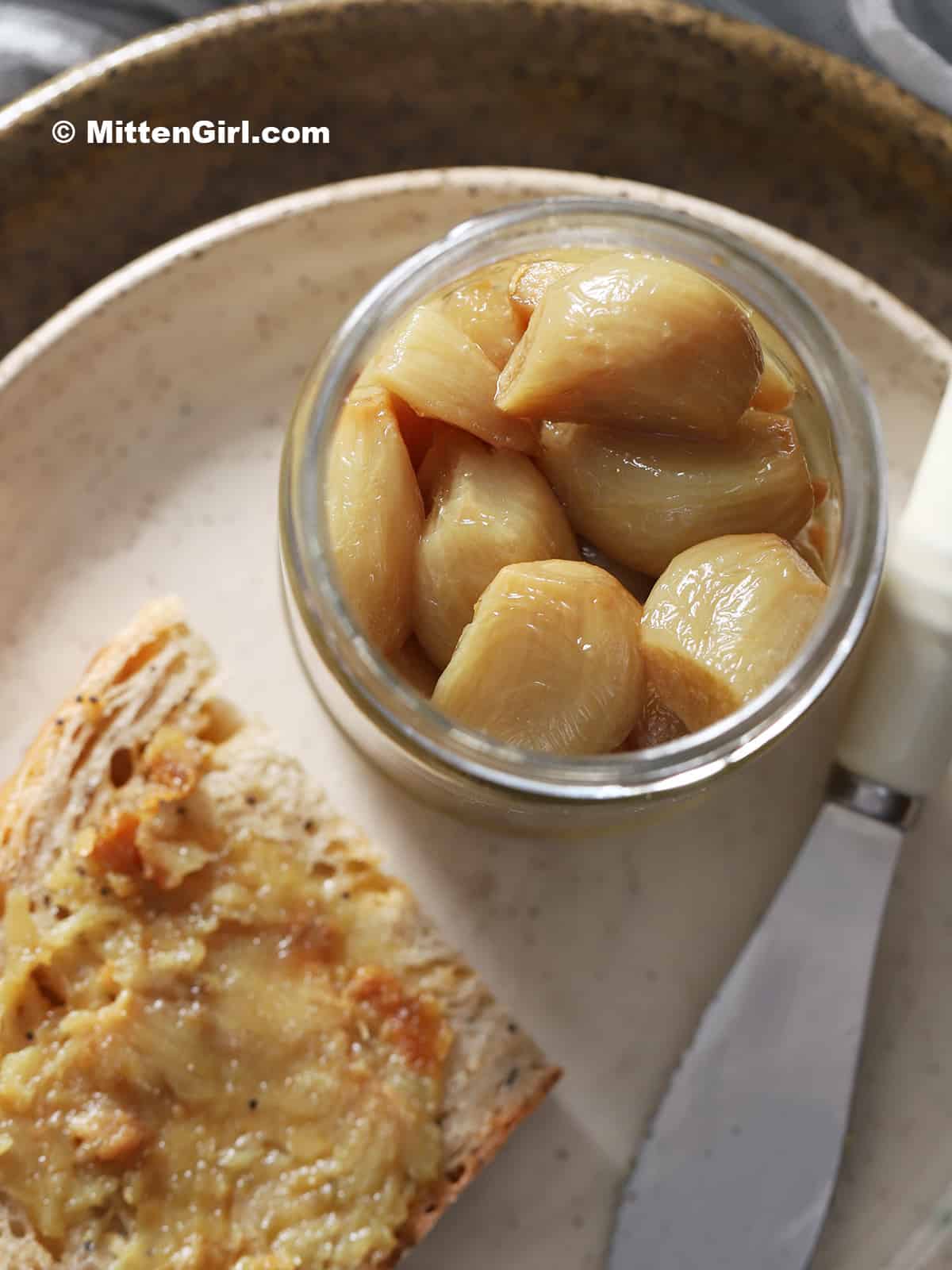
Roasted Garlic Recipe (Without Foil)
Ingredients
- 2 bulbs fresh garlic, or 24 peeled cloves
- 2 cups extra virgin olive oil
Instructions
- Break open each bulb of garlic and pull out the individual garlic cloves.2 bulbs fresh garlic
- Peel the cloves using a small paring knife.
- Place peeled garlic cloves into a small, ovenproof baking dish.
- Pour in enough olive oil to cover all of the garlic cloves. (Make sure no part of the cloves are sticking up above the oil line.)2 cups extra virgin olive oil
- Bake at 350 degrees F for 15 minutes.
- Remove from the oven and let cool for 30 minutes.
- Using a slotted spoon or small mesh strainer, remove the cooked garlic cloves from the oil.
- Store garlic cloves in an airtight, small glass container in the refrigerator.
- Once it has cooled COMPLETELY, strain the remaining garlic-flavored oil through a fine mesh strainer to remove any lingering bits of garlic.
- Store the garlic oil in a small jar.
Tips for Making Oven Roasted Garlic
- The oil in the garlic confit will be EXTREMELY hot when you remove it from the oven. Be very careful and let the roast garlic cool for at least 30 minutes (longer is fine!) before handling. Make sure the oil has cooled COMPLETELY before you store it.
- Garlic burns quickly. You want the garlic cloves to be fork tender but not at all brown in order to have the best texture and flavor.
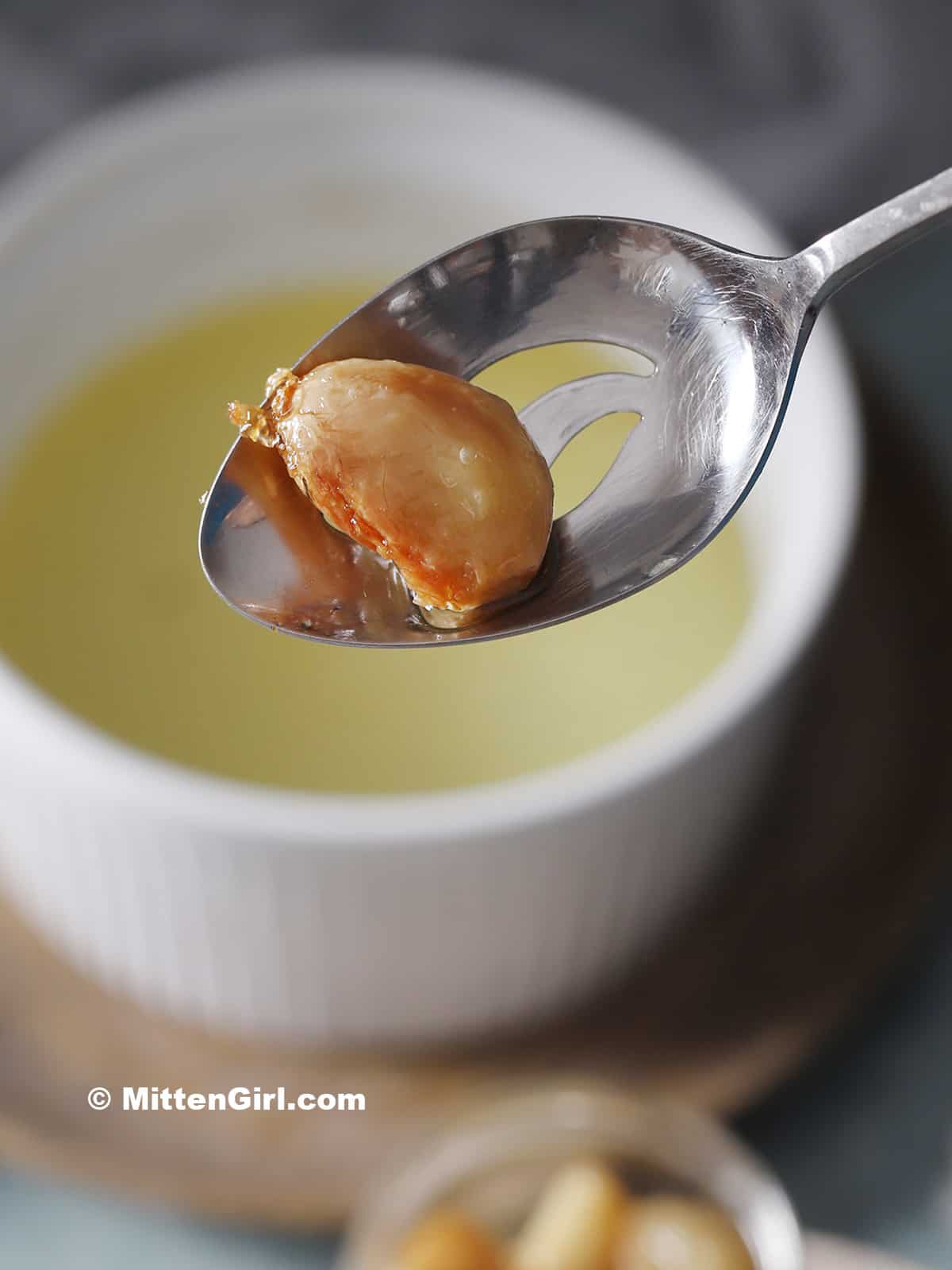
- Don’t smash the garlic cloves when peeling them! The more smashed the raw clove, the faster and less evenly they’ll cook leading to the edges getting too dark and overcooked or burned. (See the photo below from one of my test batches.) Take the time to peel the cloves without smashing them into pieces.
How to Use This Roasted Garlic Recipe
There are so many delicious ways to use this homemade garlic confit recipe.
- Spread the cloves directly onto a slice of crusty bread with a pinch of salt and/or some parmesan cheese.
- Stir several cloves of smashed, roasted garlic into mashed potatoes, guacamole, and/or your favorite pasta dish.
- Make my Roasted Garlic and White Bean Spread.
- Add to the top of your homemade pizza.
- Make my Bruschetta al Pomodoro (Tomato Bruschetta).
- Mash roasted garlic cloves into butter (about 1 clove for every 1 tablespoon of butter) for a delicious spread. Use this compound butter on baked potatoes, to top a grilled steak, or to make amazing garlic bread.
FAQs and Substitutions
I often make this recipe using canola oil or vegetable oil in place of much-more expensive olive oil. Both work great and give you the same roasted garlic results as olive oil. These two oils also don’t thicken in the refrigerator the way olive oil can.
Yes! Many large grocery stores will have containers of raw, pre-peeled garlic available near the deli or prepared fresh food area. This is a great time saver if you can find them!
The risk of botulism is from raw garlic cloves that have been stored in oil – especially if the mixture is left out at room temperature or saved for a long time. However, we’re cooking this garlic well beyond both the temperature and time the World Health Organization says is needed to kill off the toxin caused by the botulism bacteria.
Yes. Some garlic grows with a purple skin on it, making it look like the whole garlic cloves are wrapped in purple stripped skin. This is totally normal! Unwrap the individual cloves. As long as those are a solid, creamy, pale yellow color, you’re good to go.
Recipes to Enjoy with Roasted Garlic Confit
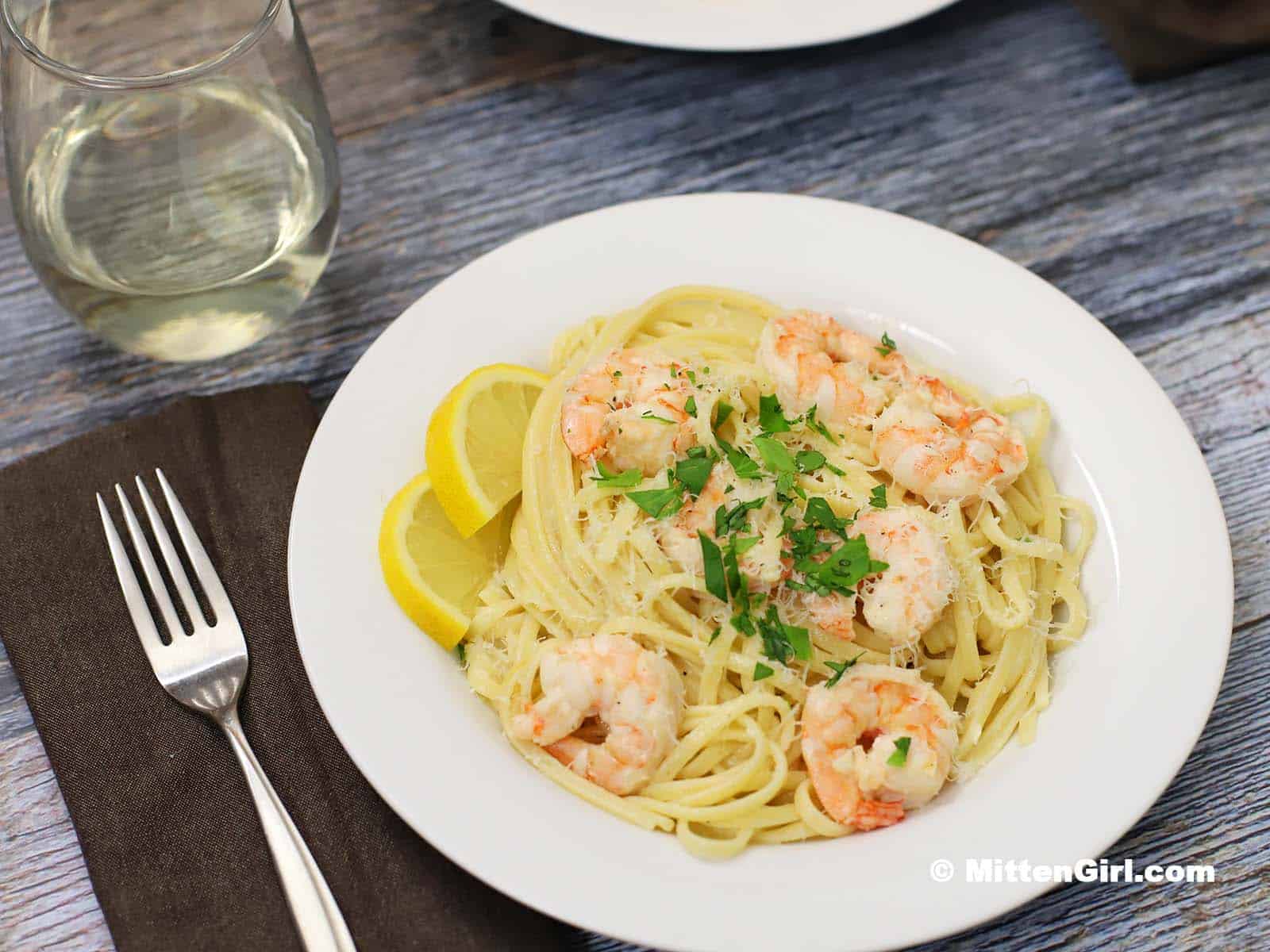
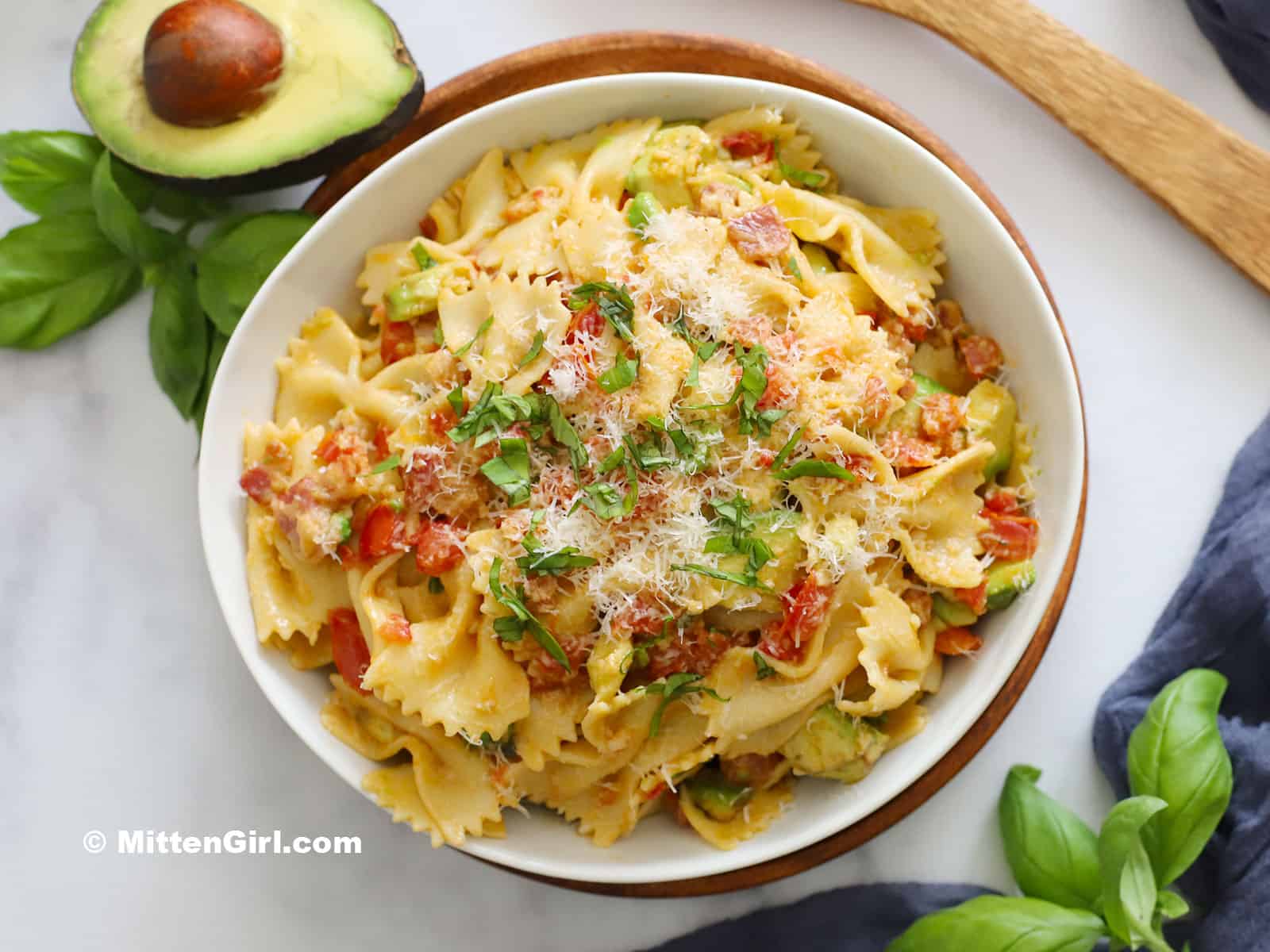
Add several cloves of smashed, roasted garlic into my Shrimp and Lemon Pasta or Bacon Avocado Pasta. Or make my Roasted Garlic and White Bean Spread or Bruschetta al Pomodoro (Tomato Bruschetta).



Roasted Garlic like this is one of my favorites and this is a great description of how to do it!
Thank you so much! Roasted garlic is one of my favorite things too. 🙂
Hi, just wondering if I could do a larger batch of garlic and afterwards freeze the cloves and oil separately?
I haven’t tried freezing the garlic cloves themselves, but I would think they would do fine. The type of oil you use will depend on how it freezes. Extra virgin olive oil will freeze well, but if you use a vegetable or canola oil, it may not solidify completely. If you decide to try it, I’d use an ice cube tray to freeze the cloves in a little bit of the olive oil the way people to do preserve fresh herbs. Hope that helps!
Can I freeze the roasted garlic? Can I freeze the garlic oil to extend shelf life?
You can freeze both. Freeze them in small portions – like in an ice cube tray – for easy use later. I store the roasted garlic – in the oil – in a mason jar the refrigerator and have never had an issue with shelf life. Olive oil will thicken in the fridge and solidify in the freezer. If you choose a different oil like canola or vegetable oil for the recipe, that will not solidify when cold and instead stay liquid, so be prepared for that.